KYOTO
February
Yoshida-jinja Shrine Setsubun Festival
02-04 February
Yoshida-Jinja
Shrines and temples hold rites to exorcise demons, an event marking the start of spring according to the lunar calendar.
On this day, every family takes dried beans called "mamemaki" and throws them at someone dressed as a demon, yelling, "Out with the demon, in with good fortune." to drive away the ogre. People also eat "futomaki" sushi while facing a direction that has been decided as auspicious for that particular year. It is customary to eat one more bean than your age.
The setsubun festival at Yoshida-jinja Shrine is especially lively, lined with stalls and crowded with people.
The biggest event is the fire festival. The ceremony begins at 11 PM when seven meter tall fire is lit, burning whatever offerings worshipers have brought. A fat, blazing column scorches the chilled night air.
Mibu Kyogen
02-03 February, 21-29 April, 3 days in October around Sports Day
In Mibu Kyogen, mimed Buddhist morality plays are performed at Mibu-dera Temple three times annually, just as they were in Kyoto's early medieval period.
Kyogen use colloquial language to poke fun at such subjects as samurai, depraved priests and faithless women. Costumes tend to feature bold colourful patterns.
The plays were originally designed to provide comic relief during a program of Noh plays. Kyogen are satires that take the spectator from the sublime realm of Noh into the ridiculous world of the everyday.
Mibu Kyogen is held at the Mibu-dera Temple three times annually.
Baika-Sai
25 February
Kitano-tenmangu Shrine
Geisha and maiko host "Nodate" (an outdoor tea ceremony) beneath the plum blossoms during the Baika-sai, which takes place at Kitano-tenmangu Shrine each year on February 25. Visitors at the shrine can look on as they commemorate Sugawara Michizane on the anniversary of his death. Sugawara Michizane was a well-known scholar, politician, and plum-blossom aficionado of the Heian-era who is celebrated as the god of study in the shrine on the anniversary of his death.
Advance tickets to the festival are available and highly recommended as Baika-sai usually attracts crowds of thousands.
March
Hina-Matsuri (DOLL FESTIVAL)
03 March
Ichihime Shrine and Hokyo-ji Temple
During the Hina-matsuri (Doll's Festival), families with young girls display in their homes a group of dolls representing the Heian court. They also serve special dishes including hina arare, grilled rice cake; hishimochi, stacked diamond-shaped rice cakes of white, green, and pink; and sushi.
The public Hina-matsuri celebrations held at Ichihime-jinja Shrine and Hokyo-ji Temple are especially famous.
Higashiyama Hanatoro
14 - 23 March
Ichihime Jinja Shrine
As the spring tourist season gives way to March, you can experience a special light-up called, "Higashiyama Hanatoro" at Higashiyama, one of Kyoto's most popular sightseeing spots. Here, hundreds of lanterns made of bamboo and ceramic ("andon") line the evening streets and bamboo forest, illuminating your path and creating a magical atmosphere. Nearby temples and shrines also hold their own special light-ups.The Fox's Wedding Procession14 - 23 MarchChion-in Temple Sanmon --> Maruyama Park --> Chorakukan --> Maruyama Concert Hall --> Entoku-in Temple --> Kodai-ji Temple Park --> Kodaiji-tenmangu ShrineWatch fox illuminated by spectacular fireballs, while you walk safely through the night streets. This is a magical way to experience the ancient celebration of the fox's wedding to the gods, which brings good fortune to all.
Sky Bus Kyoto Higashiyama Flower Lantern Road 2008 Special Trial Event
14 - 16 March
Kodai-ji Temple Parking Lot --> Gion --> Okazaki Park --> Jingu Road --> Chion-in Temple --> Kodai-ji Temple Parking Lot (Total time: about 25 minutes)
Drive all over Kyoto in an open-top bus free of charge during the following period.
Higashiyama Hanatoro Special Walking Tour
15, 16, 17 March, 3 April, 15, 16, 17 September
Okuno-in --> Hon-dou(The main temple).Otowa-no-taki --> Kyoudou --> Three layered pagoda --> West Gate --> The town surrounding Kizomizu-dera Temple --> (Turns back at the edge of the town surrounding Kizomizudera.) --> Ni-ou Gate --> Todoroki Gate --> Kairou (cloisters) --> Stage at Kiyomizu --> Hon-dou (The main temple)
The combination of the lantern lights, splendid flower arrangements and fun and detailed English guide is a sight that everyone should experience.
Kiyomizu-dera Seiryu-e
15, 16, 17 March, 3 April, 15, 16, 17 September
Higashiyama
The legend says that Kyoto has been protected on all sides by 4 Gods from time immemorial.
One of them is Seiryu, which is a sacred dragon guarding the east side named Higashiyama, where Kiyomizu-dera is located. In fact, Seiryu is considered as the incarnation of Kannon, enlightened being of Marcy and Compassion, mainly worshiped in Kiyomizudera.
Seiryu has been revered so much because it has been watching out Kyoto day and night without any rest to make sure people don't suffer from misfortune.
For the deep appreciation to Seiryu, a Buddhist ritual called Kiyomizu-dera Seiryu-e started 7 years ago. It is the dragon procession going around the temple and its main approach. It is held in spring and autumn; March 15, 16, 17, April 3, September 15, 16, and 17.
The image of Seiryu was all designed by Emi Wada as her dedication, and was constructed with donation and cooperation from Kyoto-based traditional arts craftsmen.
Kyoto Sake, New Spring Sake Tasting, New Product Display
20 - 23 March * will end once the sake tasting is over
Hokan-ji Temple Grounds (Yasaka-no-to, Yasaka Pagoda)
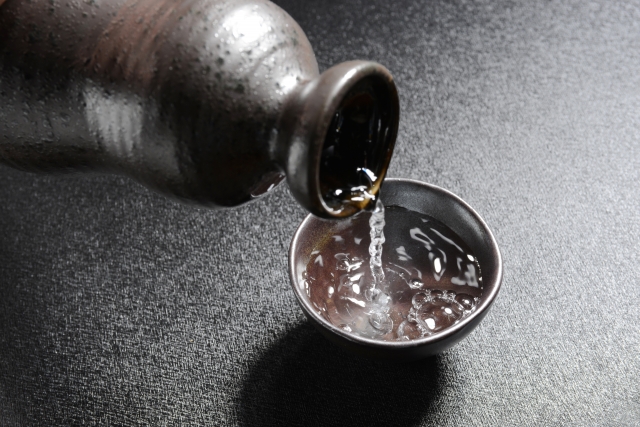
Downtown Kyoto is home to sake breweries that have been in business uninterrupted for many centuries, and visitors are invited to try their products. Tourists often remark that sake straight from the brewery has an unique deliciousness, and everyone is welcome to purchase bottles on the spot.
Hanami (Cherry-blossom viewing)
March-April
From the end of March through the beginning of April, when the cherry blossoms are in full bloom all throughout Kyoto, people gather in parks to admire them.
In Maruyama Park people spread out sheets on the ground, and underneath the cherry blossoms eat, drink sake and beer, and sing. The atmosphere is always electric.
Hirano-jinja Shrine, near Kitano-tenmangu Shrine, features hundreds of cherry trees and is especially popular with people who gather to enjoy the cherry blossoms, eat, drink, and keep the party alive to late in the night
The banks of the Kamo-gawa River, which runs though downtown, are beautifully coloured by the cherry blossoms. Nakaragi-no-michi Street between Kitayama and Kita-oji is known as the place where the blossoms are most beautiful.
Tetsugaku-no-michi Street and the area around Heian-jingu Shrine are also famous as places where the cherry trees bloom in profusion. Needless to say, Ninna-ji Temple's "omuro-no-sakura" is also worth an experience.
April
Miyako Odori
01 - 30 April
Gion Kobu Kaburenjo Theatre (next to Gion Corner)
A Spring Geisha Dance Performance
The geisha and maiko still carry out their traditional annual dances during the height of the cherry blossom season throughout the month of April. The most popular of these dances are the Miyako Odori "Cherry Blossom Dances" and "Dances of the Old Capital." Spectators flock from Japan and worldwide to attend the event. Incidentally, Gion geisha prefer to call themselves geiko, which means a woman skilled in dance and music.
May
Aoi-Matsuri Festival
15 May
Kamigamo-Jinja and Shimogamo-Jinja
Aoi-Matsuri Festival originated in the 6th century and became Kyoto's most famous festival during 8th and 12th centuries, the Heian Era.
This festival consists of a procession of beautifully decorated oxcarts attended by some 500-plus people dressed in Heian-period costume.
The parade leaves the Old Imperial Palace in the morning and heads north to the Shrine, reaching it around noon.
It then proceeds to Kamigamo-jinja Shrine, arriving there late in the afternoon. The Kyoto Imperial Palace and Marutamachi Avenue are the best vantage points for the watching the parade.
June
Ukai (Fishing with cormorants)
From Late June to late September depending on location
Arashiyama and Uji-gawa River
"Ukai" is an evocative summer spectacle. Through the amazingly skilled use of leashes, each fisherman controls ten to twelve cormorants. This method of sending birds diving down and down again to fetch catch ayu (sweet fish) is one of the traditional fishing methods unique to Japan since the Heian-era.
The fishermen display wonderful artistry when fishing with their trained birds. Over the river surface, which is shrouded in darkness, the cormorant boats slowly emerge. They are lit by baskets of fire and you can hear the command the handler gives to the birds to commence fishing by plunging into the water all at once. You can watch this from the river banks or aboard a boat
July
Gion-Matsuri Festival
14-17 July
The Gion-Matsuri Festival spans the entire month of July and is known as one of the three greatest local festivals in Japan. It is crowned on July 17th by a parade in which 32 enormous floats, adorned with ancient tapestries from the world over, are pulled through town with by volunteers with their bar hands alone. During the height of the festival, streets bustle late into the night with crowds of people in traditional dress and with booths selling barbequed chicken skewers, traditional Japanese sweets and many other culinary delights.
The Gion-Matsuri Festival began in 869 while Kyoto was in the grip of a horrible plague. At the behest of the emperor, a priest from Yasaka-jinja Shrine led a procession through the streets to pray for mercy from the god who was the source of the disease. The pestilence subsided but ritual continued, gradually evolving through the years into its modern form.
The floats are lined up on Shijo-dori from the 14th to the 16th of July to admire and tour. Each float has a specific meaning, and sells talismans related to it. On the night of the 16th a number of demonstrations of traditional Shinto performing arts are held at Yasaka-jinja Shrine. A number of smaller events are held throughout the month.
Most visitors to the festival opt to stand and watch the main parade on the morning of the 17th, but seating is also available for several thousand yen. Inquire at your travel agency or the tourist information centre if you are interested. The most interesting points to watch the parade are perhaps Shijo-Kawaramachi and Kawaramachi-Oike. At these intersections, the massive floats are turned, like clockwork, at right angles using wooden boards.
The preparation of the festival is very much a community affair. Residents of the areas around which the festival takes place put their heirlooms on display for the public to view during the 14th through the 16th. They assemble the floats and break them down immediately after the parade on the 17th has ended.
Downtown Kyoto is open only to pedestrians during the nights of the 14th, 15th, and 16th.
August
Touki-ichi
At the Touki-ichi (pottery fair) held every August, lovers of Japanese pottery and ceramics will find a wide variety of goods for sale.
Ceramic and Porcelain goods can be purchased in stalls along Goji-dori Street.
Those on the north side sell Kiyomizu-yaki, those on the south side sell pottery made outside the city.
Gozan no Okuribi (Mountain Bon Fire)
Middle of August (during Obon Festival)
Kyoto
Gozan no Okuribi is a traditional event that takes place in Kyoto during the Bon Festival, or as the Festival of the Ancestors. It takes place on the 16th of August every year. On each of the five mountains that surround the city a giant bonfire is set alight. Three of these fires are in the shape of kanji, the Chinese characters used in writing Japanese. Those bonfires are known individually as Daimonji, Hidari Daimonji, and Myo-ho. The other two fires are in the shapes of familiar objects. These are called the funagata and toriigata. These are bonfires in the shape of a boat and a Shinto shrine gate, respectively.
There are a number of explanations about where Gozan no Okuribi originated from. The festival has long been close to the hearts of the people of Kyoto and is said to have roots in the 13th century. This tradition is tied together with beliefs surrounding the memorial services for departed ancestors on August 15 that is known as the Bon festival. The Okuribi were meant to guide the souls of the ancestors that had come to this world in their return back to the world beyond. The Okuribi are also believed to protect against evils. In addition, drinking water whose surface reflected the light of the Gozan no Okuribi is believed to prevent paralysis.
Burring strips of cedar wood known as gomaki in the torches of the Okuribi is a method of praying. Along with Aoi Matsuri (The Hollyhock Festival), the Gion Festival, and Jidai Matsuri (The Parade of Eras), the Gozan Okuribi is called one of the four great events of Kyoto.
During the harvest moon Japan offers many special moon viewing events. The event is called "O-tsukimi". This custom may have begun because at this time of year clear skies reveal a brilliant full moon. Moon viewing first appeared in China and came to Japan in the Heian Period. Unlike today, simply gazing at the natural landscape was considered in that time to be entertainment. Nobles would gather to gaze at the moon and improvise short poems in competition with one another while enjoying luxurious banquets.
The moon viewing ritual ties religious belief in the moon with the harvest festival where offerings to the moon are made. Areas are decorated with pampas grass and clovers to protect against evil spirits and sacred sake and moon viewing dumplings are offered as charms to bring health and happiness. These are events are not only about admiring a beautiful moon. They are opportunities to pray and give thanks for a good harvest.
October
Hatsuka Ebisu Festival
19, 20, 21 October
Ebisu-jinja Shrine
During the Hatsuka Ebisu Festival, business people flock to Ebisu-jinja Shrine to buy fukuzasa, branches of bamboo festooned with miniature treasure ships, rice bales, gold coins and other lucky charms. This festival celebrates Ebisu, one of the Seven Gods of Good Fortune and the patron deity of merchants.
During the festival ebisu-bayashi music wafts through the air of the shrine and knives produced by the Oima school, well known among cooks, are put on display.
The festival originated in the Edo period, when Kyoto merchants returning from business trips to Edo would visit this shrine to give thanks for a successful journey. It is held only in Kyoto on October 19, 20, and 21.
Kurama Himatsuri (Fire Festival)
22 October
Kurama
In Kyoto's small northern suburb of Kurama, a huge, energetic fire festival takes place on October 22 of each year. It original purpose was to illuminate the path thorough the world of the living for the spirits of the departed.
The festival begins at 6pm and continues to till past midnight. Tall fires are lighted in front of homes in Kurama to mark the opening of ceremonies. A procession of boys carrying small lighted torches follows. Then, teams of men chanting and marching to the rhythms of drums carry larger and larger torches, the biggest of which weighs 100 kilograms. The torch bearers finally converge in front of Yuki-jinja Shrine and a portable shrine, or mikoshi, is carried through the smoky streets until the festival ends. This festival is truly unique and should be seen by anyone in Kyoto on the day it takes place.
Jidai-Matsuri Festival
22 October
The Jidai-Matsuri Festival, one of the biggest festivals in Kyoto, takes place on October 22nd. Part costume show, part history lesson, the procession winds from the Old Imperial Palace to Heian-jingu Shrine.
Several hundred marchers dress in exquisite costumes from the various periods of Kyoto history, from the Heian-era of the 8th century to Meiji-era of the 19th.
Heian-jingu Shrine enshrines two emperors, Emperor Kammu who moved the capital to Kyoto, and the last emperor to come from Kyoto, Emperor Komei. This festival began on 1100th year of the founding of the capital. On Oike-dori Street, a viewing platform is set up to accommodate the viewers.
Shimai
21st of every month
Kobo Flea Market
On 21st of every month a flea market takes place on the grounds of To-ji Temple.
A wide range of goods are available here, often including old kimonos for a few hundred yen, valuable antiques, and delicious food.
A wide range of goods are available here, and often include old kimonos for a few hundred yen, valuable antiques, and delicious food.
The date of the flea market was chosen to commemorate the death of Kobo Daishi, the founder of Esoteric Buddhism. In particular the New Year market (Hatsu Kobo) in January, and the Year-end market (Shimai Kobo) in December are famous Kyoto fixtures.
Shimai Tenjin Flea Market
25th of every month
Kitano-tenmangu Shrine
Many stalls and booths are lined up to sell goods ranging from used clothes and antiques to culinary delights. The New Year market (Hatsu Tenjin) and year-end market (Shimai Tenjin) are particularly famous.
The 25th of the month was selected for the market to commemorate the death of Sugawara Michizane, the patron deity of learning.
December
Okera Mairi
31 December
Yasaka-Jinja Shrine
The roots of the medicinal plant okera are set ablaze in the Okera Mairi Festival. Visitors to the shrine then take home the embers of the fire, taking care to keep them alight. They then use them to cook zoni, a broth containing chicken, vegetables, and rice cakes. This custom dates back to ancient times and has been designated as an important cultural property of Kyoto.
OSAKA
January
Toka Ebisu
10 January
Imamiya Ebisu Shrine
This festival is dedicated to Ebisu, the god of business and prosperity. It features a procession of women in colourful kimono carried on floats through the main streets.
July
Tenjin Matsuri
24-25 July
Tenmangu Jinja
One of Japan's three major festivals. Various festivities on the first day include a procession of danjiri festival floats, drumming performances and a lion dance. On the second day, spectators gather at 4pm and a drum-led procession from Tenmangu Shrine to the Tenjin Bridge begins. At 6.30pm the procession continues on the river with 100 decorated boats. Bugaku and kagura are performed on a lantern-lit floating stage in the middle of the river.
Sumiyoshi Matsuri
30 July - 1 August
Sumiyoshi Taisha Shrine
This is the last of the major summer festivals in Osaka and is also known as the 'Minami-matsuri' or 'Oharai'. At its heart are various Shinto purification ceremonies and the festival ends with a mikoshi parade.
September
Kishiwada Danjiri Matsuri
13-14 September
Kishiwada
Mikoshi, carried by their bearers at top speed, rampage around the streets of Kishiwada followed by a stampede of festival-goers, hundreds strong. Not for the faint-hearted but compulsive viewing.
October
Midosuji Parade
13 October
Central Osaka
Held on Midosuji Avenue annually since 1983, this parade has the most varied selection of entertainment of all Japanese parade festivals. It features music, dance, costumes and tradition not just from Japan but from all over the world.
November
Shitenno-ji Wasso
02 November
Shitenno-ji Temple
A parade of thousands of people dressed as heroes and historical figures takes to the streets of Osaka. Colourful boat-shaped floats join the procession and add to the magnificent spectacle.