Japan Package Tours, Cheap Flights to Japan, Japan Hotels and Japan Rail Pass
JAPAN RAIL PASS - Special Discount Rate from $298
2008-2009 Travel Japan brochure
TOKYO/YOKOHAMA
Transport
Things to See & Do
Eating Out
Special Events
General Info
KYOTO/OSAKA/KOBE
Transport
Things to See & Do
Eating Out
Special Events
General Info
SAPPORO
Transport
Things to See & Do
Eating Out
Special Events
General Info
NAGOYA
Transport
Things to See & Do
Eating Out
Special Events
General Info
FUKUOKA
Transport
Things to See & Do
Eating Out
Special Events
General Info
USEFUL INFO
Travel Tips
Travel Advice
Japanese Events in Australia

Home > Tokyo/Yokohama > Eating Out

Tokyo/Yokohama

Tokyo/Yokohama - Eating Out

Tokyoites are known for their preference for eating out and there are more than enough restaurants to satisfy them. Almost every kind of cuisine in the world is available, and eating establishments range from 5-star quality to modest vendors in stalls (they are safe) around the stations.
Fast food chains are also represented in force, both local and international ones. Most moderately-priced restaurants still have plastic models of what they serve in the window, and most traditional-style Japanese restaurants still specialize in one kind of cuisine.
Many coffee shops serve set breakfasts and lunches, while standard restaurants, which serve dishes with elements of both western and Japanese foods, have reasonably-priced luncheon sets.
Department stores invariably have a restaurant floor with a variety of Western and Japanese restaurants usually toward the top and their basement food floors and larger supermarkets have prepared foods to go.
Truly fine restaurants are now plentiful and several world-renowned restaurants have opened up branches in Tokyo, although the smaller bistro type can be equally as delicious.

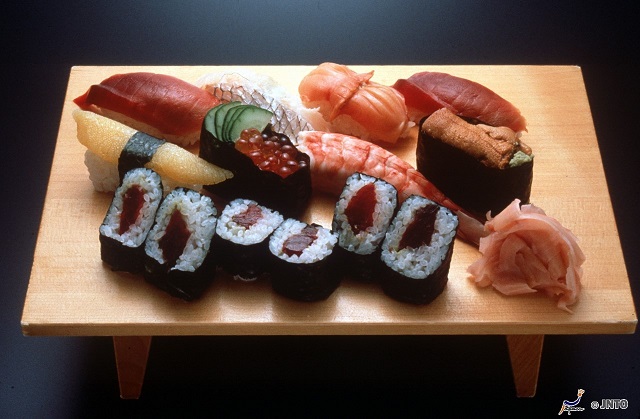
Edomae-zushi

Edomae-zushi consists of a small ball of rice with a slice of fish or other topping, and it uses fish caught in Tokyo bay. Edo means Tokyo and Edomae means Tokyo bay. The typical Edomae- zushi has tuna, cuttlefish, bonito, shrimp, etc. Edomae-zushi is like a ship's bottom in shape and it is bite size. Edomae-zushi was produced about 170 years ago. Sushi was a kind of fast food, sold from small booths around the city, and it rapidly became popular because it could be prepared quickly. This was important to people living in bustling Edo (old name for Tokyo). Today, the popularity of sushi has spread not only within Japan but all over the world.

Tempura

Tempura is food deep fried in oil after being coated with a mixture of egg, water and wheat flour. Among the ingredients used are prawns, fish in season, vegetables and dried seaweed. Tempura is eaten hot with a specially prepared soy sauce flavoured with grated daikon radish and ginger.Although there are various styles, the rich, nutty type fried in sesame oil is called Edo-mae (Tokyo-style).Tempura was brought to Japan by the Portuguese in the late 16th century. Today, tempura is a very popular Japanese food, as well as the most renowned outside of Japan.

Soba

Soba noodles are native Japanese noodles made of buckwheat flour (soba-ko) and wheat flour. They are roughly as thick as spaghetti, and prepared in various hot and cold dishes. The most basic soba dish is 'zaru soba' in which boiled, cold soba noodles are eaten with a soya based dipping sauce flavoured with 'wasabi', grated daikon radish, and finely sliced green onions. Soba is a simple food, but has plenty of vitamins B1 and B2, as well as rutin and choline, and a growing number of people now see it as an excellent health food.

Oden

Oden is a popular Japanese hotpot dish, which includes daikon radish, fish cakes, boiled eggs, 'konnyaku' (yam cake), and other ingredients. It is originated in Edo (old name for Tokyo) roughly around the year 1850. These ingredients are simmered in kelp-based stock for hours. It is usually cooked in a big ceramic pot at home. It is fun and warm to eat oden around table with others. Oden is even sold in convenience stores too. Japanese love oden! Also, as the autumn arrives, many oden' yatai' (stalls) begin their business around train stations and entertainment districts. A yatai usually has a small counter with a few chairs. It is inexpensive to eat in any yatai. Businessmen on their way home from work often stop at oden yatai and sip sake. People order their favourite ingredients from a large oden pot with beer or sake. You can eat oden at Izakaya bars too.

Kabayaki (Broiled Eel)

Kabayaki is a delicacy especially favoured by the Japanese people due to its high nutritive value and mouth-watering taste. The prepared eel is skewered, steamed to remove excess oil and then placed over an open charcoal fire repeatedly dipped into a special sauce during the broiling process. The fat dissolves, leaving meat that's fluffy and light. The sauce is a mixture of soy and 'mirin' (rice wine). For a piquant touch, gourmets sprinkle the green spice 'sansho', which has an enigmatic but lemongrass-like aroma. Unagi kabayaki remains an eternally simple and divine dish. Unagi is traditionally consumed in the summer months to fortify the body against fatigue during the hot weather, usually served in a box over a bed of rice. There's a cluster of unagi specialists in Asakusa and Ryogoku.

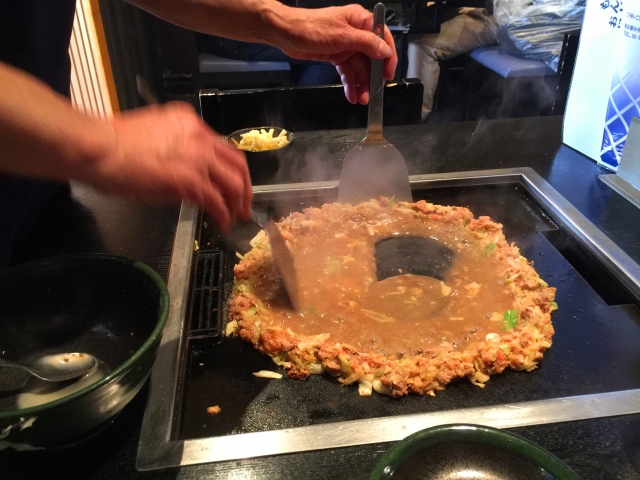
Monjyayaki

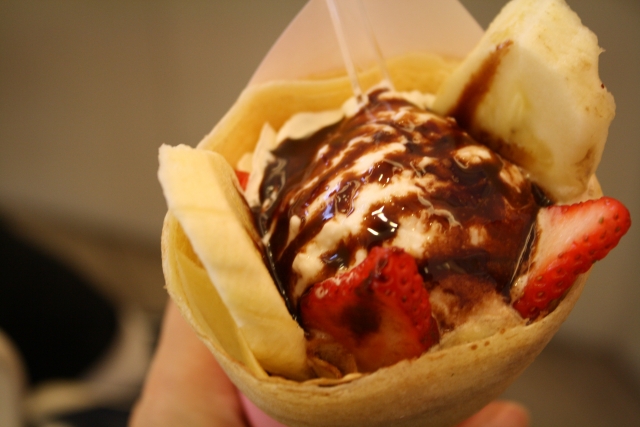
Monjyayaki is similar to crepe made from seafood, cabbages, and meat, and it is loved by people who live down town in Tokyo.

Chanko

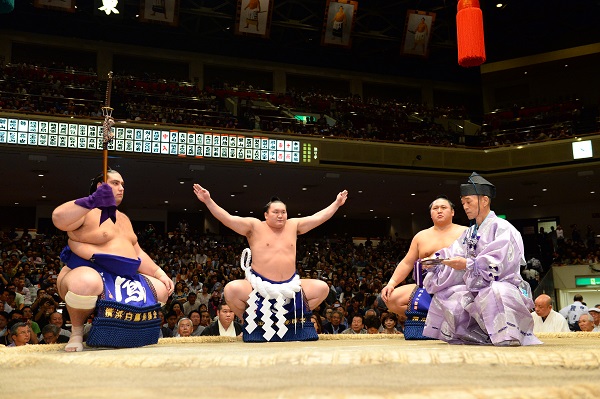
The word 'chanko' represents any type of food that sumo wrestlers eat. In general, there are two types; the 'yose-nabe' and 'chiri-nabe'. The yose-nabe consists of chicken, fish, seasonal vegetables and tofu cooked in chicken broth and the chiri-nabe consists of seasonal vegetables and chopped fish cooked in broth but eaten by dipping the cooked ingredient in a vinegar and soy sauce mix. Chanko is very healthy and nutrient-rich food.

Shumai (Dumplings)

Shumai is the famous food of Yokohama. Shumai is steamed Chinese pork dumplings wrapped in a thin flour and water pancake. Although shumai was originally Chinese food, shumai is famous in Yokohama. A famous boxed lunch made with Shumai is available at Yokohama Station.Yokohama has a famous Chinatown area, where many Chinese restaurants are located and many tourists visit. Chinatown is probably the reason for steamed meat dumplings being a famous food in the Yokohama area.

Senbei (Rice Cracker)

Senbei is a crispy cracker made from rice. There are a variety of flavors, but senbei has roughly two types, sweety type and salty one. The main ingredient of sweet-taste senbei is a wheat flour and a sugar and egg, so it is similar to cookie or biscuit. On the other hand, salt-taste senbei is mainly made from rice and soy sauce. But now there are also a lot of senbeis with another seasonings such as 'miso' (soy beans paste), cheese, curry, salt, wasabi, chili and mayonnaise etc. Though you can buy packed senbei in any stores, it is worth trying fresh senbei grilled on the spot.

Ningyoyaki

Ningyoyaki is one of the most famous Tokyo confectioneries. It has over a hundred years of history. It contains 'anko' (sweet pasted sauce made from red beans) coated with light sponge cake. Each detailed charming face represents the seven gods of luck. Asakusa is known for ningyo-yaki.
pagetop
Travel Agent Lic. NSW 2TA001961 / QLD TAG951 / VIC 32036 / WA 9TA00572 / SA TTA151017 / NZ TAANZ