Japan Package Tours, Cheap Flights to Japan, Japan Hotels and Japan Rail Pass
JAPAN RAIL PASS - Special Discount Rate from $298
QBE Insurance 20%OFF!!
2008-2009 Travel Japan brochure
TOKYO/YOKOHAMA
Transport
Things to See & Do
Eating Out
Special Events
General Info
KYOTO/OSAKA/KOBE
Transport
Things to See & Do
Eating Out
Special Events
General Info
SAPPORO
Transport
Things to See & Do
Eating Out
Special Events
General Info
NAGOYA
Transport
Things to See & Do
Eating Out
Special Events
General Info
FUKUOKA
Transport
Things to See & Do
Eating Out
Special Events
General Info
USEFUL INFO
Travel Tips
Travel Advice
Japanese Events in Australia

Home > Tokyo/Yokohama > General Info

Tokyo/Yokohama

Tokyo/Yokohama - General Info

TOKYO

General Information

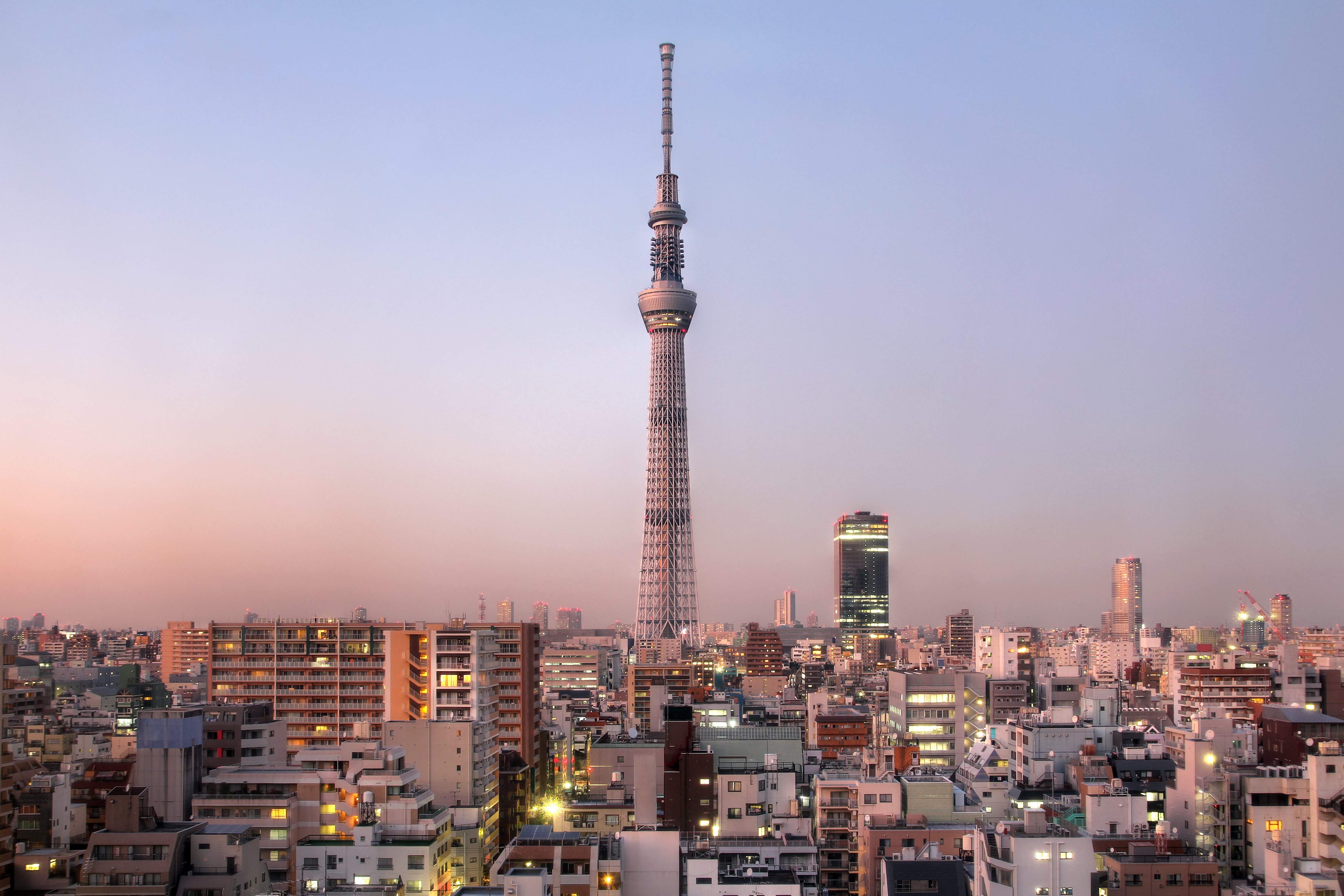
Tokyo is a dynamically modern metropolis that nearly 12 million people call home. Exciting stimulating and safe, Tokyo offers a treasure trove of ever-unfolding surprises and discoveries that beguile the resident and visitor alike. Covering more than 800 square miles (2,000 square kilometres), it is an enormous, fascinating entity unto itself.

Although only the official capital since 1868 when the city of Edo was renamed to Tokyo, or Eastern Capital it had been the administration centre of the country since the opening years of the 17th century when Tokugawa Ieyasu unified the nation, built Edo Castle and established the Tokugawa Shogunate.

Already a city of over a million inhabitants by the mid 18th century, the large, bustling city continued to thrive, expand and embrace all that was new, unique and exciting ? much as it does today. Fires and earthquakes have taken their toll but never deterred Tokyoites, like the proverbial phoenix, from rising vigorously from the ruins.

Fast-paced, energetic and busy, the city rarely seems to rest, and this is especially true of Tokyo's many centres. Shinjuku, Shibuya, Ikebukuro and Ueno; Nihombashi, Shimbashi and the famed Ginza. Each centre has its own special flavour and its enthusiastic adherents. Exclusive boutiques, enormous department stores and innumerable specialty shops entice the browser and window shopper as much as the serious buyer.

Art lovers are drawn to the many fine museums and art galleries, and the superb exhibits from around the world that are constantly on display. Music fanciers also have a wide selection of concert halls that have full schedules of both local and visiting musicians performing all types of music. Theatre is extremely active as well, whether for local adaptations from the European and American stage or the spectacular kabuki and highly refined Noh.

From traditional Buddhist temples and Shinto shrines to the high-tech Tokyo Tower, Tokyo is an unforgettable experience to savour and enjoy the year-round.

Getting Around

Train and Subway
Train and subway lines form a vast interlocking network that covers most of the city. Colour-coded, they are fast, efficient, frequent, safe and clean and run from early morning to around midnight. Train exits are indicated by direction; East; West; North; South and Central, while the multiple subway exits are letter/number marked. When you do not know the fare to your destination station, buy the lowest one from the automatic ticket dispensing machine and make up the difference at the other end.
One-Day Open Tickets are available for unlimited travel on JR trains or TRTA (Eidan) subways or, for slightly more, bus tickets can be purchased, though best avoided during rush hours.

Taxis
Taxis are plentiful, sport bright lights on their rooves for easy identification and display a red light in the front window when vacant (green when not). It is usually possible to hail one by raising an arm and flagging it down or to catch one at a taxi stand. The passenger door is operated by remote control by the driver. As the drivers rarely understand English it is best to have a map and directions/address in Japanese. Fares start at 660 yen (for the first 2km) and rise in 80yen increments (every 274 m or every 1min40sec waiting time). A 30% surcharge between 10:00pm and 5:00am applies. No tipping.

Buses
Bus routes are complicated as stops and destinations are written in Japanese only.

pagetop
YOKOHAMA

General Information

In 1853, Commodore Perry and his fleet of black ships came to Japan from the United States and encouraged Japan to open itself up to international trade. Until this time, Japan had been under a strict isolationist policy imposed by the Tokugawa Shogunate which lasted for almost 200 years during which very little information, very little exchange of anything with the outside world had been possible.

However, in 1858, not long after the appearance of Perry, Japan and the U.S. signed their first Friendship and Commercial Treaty, and Japan's 200 years of isolation was finally brought to an end.

Yokohama, then only a small seaside village of hardly more than 100 houses, came to be one of the first five ports to open itself to international trade. That was in 1859.

Yokohama played a key role in the early phase of Japan's modernization which followed the opening of the country. For many years it was through Yokohama that much of the Western culture, science and technology entered Japan.
Today Yokohama is still one of the nation's major international trading ports, a thriving commercial centre, and the home of some of Japan's most sophisticated industry.

The capital city of Kanagawa Prefecture, Yokohama is the second largest city in Japan after Tokyo, with a population of 3,270,000.

With an annual average temperature of 14.6 degrees Celsius, Yokohama's climate is mild and pleasant in spring and autumn and seldom goes to severe extremes of cold or heat in winter and summer. Like the rest of Japan, Yokohama shows a different face with sea-viewing and other events.

Yokohama is one of Japan's most enticing cities with its fresh seaside and mountain scenery, its friendly people, and some of Japan's most enjoyable shopping. It has a number of small but fine museums, well-laid-out parks and gardens and countless good restaurants.

As a port city, trading vessels and passenger liners on luxury cruises lend the city a lively international character while major new modernization projects can be seen. A first-time visitor to Yokohama will take an instant liking to the city for its sophisticated, cosmopolitan atmosphere.

Getting Around

Yokohama has a bus network which serves the whole city, but the tourist will find all the major places of interest within easy walking distance from the train stations on the JR and other lines that are directly linked with central Tokyo. In addition, the Yokohama Municipal Subway Line connects major stations and areas in the city, stopping also at Shin-Yokohama Station which services the Shinkansen super express train.

Taxis
Taxis are plentiful all over the city. The basic fare is 600yen for the first 2km plus 90yen for every additional 365m. Vacant taxis show a red light in the windscreen.

Double-decker Bus
A double-decker bus known as the Blue Line runs between Yokohama Station and Yokohama Bay Bridge.

Sea bass Shuttle Boat
The Sea bass, a shuttle boat, connects Yokohama Station, Minato Mirai 21 Site and Yamashita Park in 15min. This is an interesting way to see another aspect of Yokohama.

pagetop
Travel Agent Lic. NSW 2TA001961 / QLD TAG951 / VIC 32036 / WA 9TA00572 / SA TTA151017 / NZ TAANZ