TOKYO
Meiji Shrine
Set in extensive, naturally-wooded grounds, this most popular and impressive shrine is dedicated to emperor Meiji (1853-1912), who is often called the "Father of Modern Japan. An inner Garden famed for its river of irises in June and a small museum containing artifacts belonging to the Emperor and his Empress are also on the grounds.
Imperial Palace
Formerly Edo Castle, it is still surrounded by a moat. Handsome gates and old guard towers are set at intervals around the site. The approach to the main entrance is via the elegant Nijubashi or Double Bridge and is occasionally open to the public. For exact dates consult with Tourist Information Centre (TIC). The East Garden (Higashi Gyoen) is where the donjon once stood.
Senso-ji
This ancient temple with its two great gates and rows of traditional family shops and stalls, called Nakamise, that sell a plethora of goods and food, is one of the major symbols of old Tokyo. Founded in the 7th century to enshrine a small gold statue of the Goddess of Mercy caught in the net of a local fisherman, it has been a popular place of pilgrimage ever since. The present buildings are replicas of those destroyed during the Second World War.
The National Museum of Modern Art, Tokyo
Houses Japanese art since the Meiji period on its three upper floors. Visiting collections are on the ground floor. 10:00am -5:00pm. Closed Mon.
Shinagawa Aquarium
At the Shinagawa Aquarium, 2, 500 fish of 100 species (such as yellow jacks and yellowtails) swim around in schools in a giant 500-ton tank. Below them, in a 22-meter undersea tunnel, you can observe the fish from a 180-degree perspective, just like taking a walk under the ocean floor. The aquarium also offers porpoise and sea lion shows.
Roppongi Hills
Opened in spring 2003, Roppongi Hills continues to be one of Tokyo's trendiest spots. Roppongi Hills is a city within the city, an attractively redeveloped neighbourhood in the district of Roppongi, consisting of residential, recreational and office space, an art museum, cinema complex, hotel and various shops, restaurants and cafes.
Odaiba and Rainbow Bridge
The 1.7-kilometer long Rainbow Bridge connects Odaiba to the Shibaura area of Tokyo. Visitors who elect not to drive or take the train can easily reach Odaiba with a leisurely stroll along Rainbow Bridge's pedestrian walkway.
There are numerous marine parks throughout Odaiba, as almost one quarter of the Odaiba area is covered by public park space. Odaiba has greatly expanded its available waterfront area through land reclamation, and many Tokyo residents have moved here to enjoy the open space and close proximity to the bay. Each weekend, numerous visitors come to Odaiba, many of them young couples and sightseers.
Ebisu Garden Place
Ebisu Garden Place opened in October 1994, where Sapporo Brewery was previously located, in order to provide the area with greenery surrounded by fountains. The trees and fountains which run on both sides of the central square surround the buildings in Ebisu Garden Place and give the area a park-like feel. The buildings retain the colours of the former beer brewery and are home to several restaurants with different types of cuisine: Japanese, Chinese, ethnic, French, Italian, beer halls, and cafes. There is also a department store, movie theatres and galleries as well as cultural establishments such as the Tokyo City Photo Museum.
Ryogoku Kokugikan
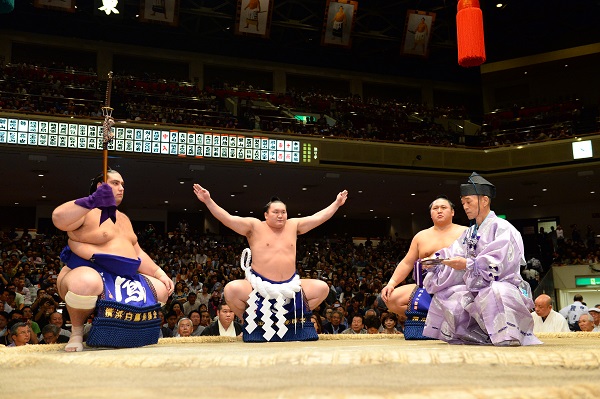
The Ryogoku Kokugikan is an imposing, 10-billion yen sumo arena that opened in time for the 1985 New Year's Tournament, less than two years after the cornerstone was laid in April 1983. This modern sumo stadium has a total area of 35,700 square meters and can accommodate 13,000 spectators, including those standing. The January, May, and September national sumo tournaments are held here. The building also houses a variety of offices: Sumo Kyokai main office, Sumo Museum, Sumo Clinic, Sumo Training School and the Kokugikan Service Co. office as well as the broadcast booths for NHK TV and radio. There is also a Japanese-style restaurant on the second floor, souvenir shops on the main floor and snack-and-souvenir shops on the main and second floors.
Kabukiza
The Kabukiza is the main centre for Kabuki theatre, which involves Japanese traditional folk dancing, and has a history dating back about 400 years. The Kabukiza is situated on the crossing of Showa Street and Harumi Street in the centre of Tokyo. The building's traditional style is remarkable, especially when you consider the fact that the building is situated in the Ginza area, well known for its modern buildings. Kabuki is probably the most popular traditional Japanese form of dance. It was influenced by various other traditional Japanese art forms, which have made kabuki what it is today. One of the most fascinating elements of kabuki is its visual impact: the costumes, make-up, and props. Music is another powerful element in kabuki. All of these factors combine to create the very special atmosphere of the kabuki world. For foreigners, there is an English translation headphone service so that those who cannot understand Japanese can follow the story and learn about the casting, the music, the costumes, and the set pieces.
Tokyo Dome
Tokyo Dome is Japan's first domed stadium, opened on the March 17 1988. Baseball games and various other events are held at the dome throughout the year. It is the franchise stadium for the Yomiuri Giants, hosting More than 60 games yearly. It is also one of the leading stadiums in the world, having hosted Japanese-American baseball games, and the first MLB opening match held outside America (Mets vs Cubs) in the year 2000. It is also the biggest concert venue in Japan. Superstars like Madonna, Michael Jackson and the Backstreet Boys are just a few of those who have held their concerts in the dome so far.
NHK Studio Park
For anyone interested in how Japan's venerable public broadcaster, NHK, goes about its business, NHK Studio Park provides an entertaining hour or so tour. For a minuscule admission fee (by Tokyo standards), visitors can see themselves on a 150-inch screen, join a real live TV announcer, peer down onto huge sound stages where chat shows or historical dramas are being recorded, or marvel at the clarity of high-definition TV. It's also possible to be part of the studio audience for certain shows, but advance booking is required.
Ameyoko
Ameya-yokocho market, called AMEYOKO for short, is the area under the elevated railway between the over-pass from Ueno Station to Okachimachi Station. In the post-war period, this area was famous for being home to Tokyo's thriving black market. Today you can find marine products, leather, clothes, precious metals, and jewels. Over 470 stores are situated here and it is well known as a place for good bargains. Scenes of the year-end bargain sales are an annual feature on TV.
Tokyo Disney Land
Tokyo Disneyland is a perfect replica of its American sister. It is filled with many people through the year - there is no off-season here. Both adults and children enjoy the fun in Tokyo Disneyland. Tokyo Disneyland is located in Urayasu, Chiba. It is just outside of Tokyo. The best way to get there is by taking the JR Keiyo line train from Tokyo to Maihama station. Then it is only a 10 min. walk from Maihama station to Tokyo Disneyland.
Shinjuku
The Shijuku subcentre of Tokyo, is one of the most exciting and energetic districts in Tokyo. There are so many fascinating shops, restaurants, department stores, movie theaters and even high-class hotels.
Shibuya / Aoyama / Harajuku
These three areas flow into one another, yet display distinctively different characteristics. The Hachiko dog statue at Shibuya Sta.'s North Exit is possibly the most popular meeting place in the country. College students and young business people flock to the area for shopping and entertainment. The Tobacco and Salt Museum and NHK broadcasting building and hall are also located here. Neighboring Aoyama appeals to the more conservative, while Harajuku is definitely for the young and young at heart.
Asakusa
Located in Taito-ku, Ueno and Asakusa represent Tokyo's shitamachi (downtown) and are popular places to visit today. Centred around Senso-ji, the two areas still embody vestiges of the old Edo era. Many of the stores around Nakamise date back centuries, while Asakusa itself is the setting for many traditional seasonal fairs, including the annual Sanja Festival (one of Tokyo's most vibrant events), Hozuki-ichi (Japanese lantern plant market), and Torino-ichi. Asakusa is also home to Kappabashi-dori, where stores offer kitchen equipment of every size and description, and Inari-cho, where visitors can find Buddhist altar fittings. Although the nationwide trend towards conformity has begun to encroach on Asakusa, the area as a whole has still managed to retain the unique flavour of the Edo era. It is because of this that Asakusa still attracts many foreign and domestic visitors.
Akihabara
Akihabara is an area in central Tokyo famous for its high concentration of electronics shops. Many dozens of stores can be found outside of Akihabara Station along Chuo Dori (Chuo Avenue) and its side streets. Akihabara offers visitors a good opportunity to view and purchase the latest electronic products and gadgets on the Japanese market such as computers, stereo systems, cellular phones and home appliances. If you are thinking about buying an electronic product for usage outside of Japan, be careful to consider regional differences in electric voltage etc. or look for products made specifically for overseas usage that are offered at some stores.
Sky Bus Tokyo
Japan's first open-top double-decker bus tours have started in Tokyo. "SKY BUS TOKYO" is an excellent way for visitors to Tokyo to enjoy 360 degree panoramic views of city's skyscraper scenery. Daily tours start from the Mitsubishi Building near Tokyo station and pass by the Imperial Palace, National Museum of Modern Art, through the government ministries district, onto the Ginza and returning to the business district of Marunouchi. The bus ride takes approximately 45 minutes, and audio-recorded guides in Japanese, English, Chinese and Korean are available for loan.
- Cost : 1200 yen for 12 years and over, 600 yen for children aged 4-11
- Departure times : Daily every hour on the hour between 10:00am and 6:00pm
Tickets can be purchased at the ticket office on the ground floor of the Mitsubishi Building just across from JR Tokyo station. Longer rides taking in the Rainbow Bridge, Odaiba and Tokyo Tower are also available on certain days.
See more details for Sky Bus website:
http://www.skybus.jp/English/index.html
Tokyo Multi-Museum Pass
The Tokyo Grutt Pass 2005 - a multi museum admission ticket - offers more discounts and benefits to visitors than previous versions. This year 46 facilities in Tokyo including museums, galleries, zoos and aquariums can be accessed using the pass. The cost is 2000 yen and the pass is valid for 2 months from the first admission.
The pass can be purchased at participating institutions from April 1, 2005 until January 31, 2006. It can also be purchased at Tokyo Tourist Information Centre (located in the First Building, Tokyo Metropolitan Government Office in Shinjuku), Tokyo Convention and Visitors Bureau (Tosho Building in Marunouchi), and Lawson convenience stores.
YOKOHAMA
Minato Mirai 21 District
Yokohama Landmark Tower
This is an observatory on the 69th floor of the Landmark Tower Building, Japan's tallest skyscraper soaring 296 meters. A panoramic view sweeping 360 degrees from the heart of Tokyo to Mt. Fuji can be enjoyed. Lower levels contain a 600-room hotel and a shopping mall with some 190 shops.
Yokohama Museum of Art
Designed by Kenzo Tange, a world renowned architect, this museum features a collection of 20th century art pieces. It also includes works of Yokohama-related artists and surrealistic works as well as a photographic collection.
World Porters
This is an observatory on the 69th floor of the Landmark Tower Building, Japan's tallest skyscraper soaring 296 meters. A panoramic view sweeping 360 degrees from the heart of Tokyo to Mt. Fuji can be enjoyed. Lower levels contain a 600-room hotel and a shopping mall with some 190 shops.
Other tourist spots in this district include the Queen's Square Yokohama (a shopping mall), Nippon-maru Memorial Park (the training sailing ship Nippon-maru and Yokohama Maritime Museum and the Yokohama Cosmo World (an amusement park).
Yamashita and Kannai Districts
Yokohama China Town
Chinatown in Yokohama is the world's second largest in scale. Over 500 establishments are clustered here, including restaurants offering all the major styles of Chinese cuisine and stores selling sundries, cool drinks, spices and even clothing. Once you pass through any of the brilliantly coloured gates, you find yourself in a different world, one that feels truly Chinese.
Motomachi
In sharp contrast to adjacent Chinatown, Motomachi, with its 600-meter-long main street, is quite popular among people of all generations. Boutiques renowned for the Motomachi brand stand side by side.
Yokohama Doll Museum
The museum boasts a collection of some 9,000 dolls from 135 countries the world over. In addition to dolls from overseas, there is a whole room devoted to traditional Japanese dolls, introducing Japan's centuries-long doll culture.
Yamashita Park
The Osanbashi Pier is Yokohama's gateway to the sea with an international passenger ship terminal. Yamashita Park is a 1km stretch from Osanbashi along the waterfront that serves as an oasis for residents and tourists alike. The Hikawa-maru, a ship once admired as a famous tourist attraction, with a museum and a floating restaurant commanding a fine view of the harbour. Across the street from the park stands the 106m high Marine Tower, the world's tallest lighthouse with an observatory.
Other attractions in this district include the Yokohama Archives of History and the Silk Museum.